MOUNT HERMON
Jabal al-Shaykh · Anti-Lebanon Range · 9,232 feet
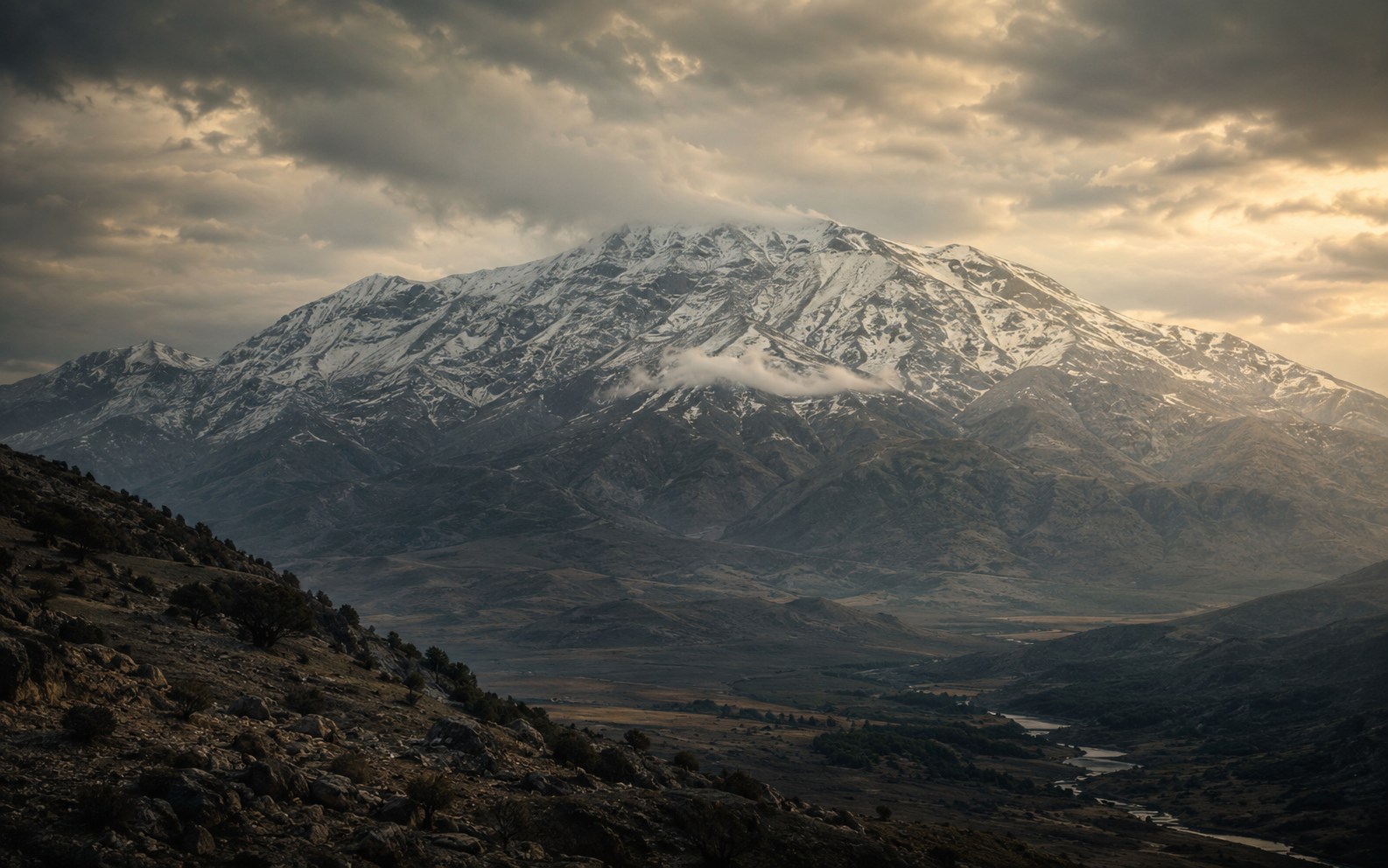
Geographic Record
The Real Place
Mount Hermon is the highest peak of the Anti-Lebanon range, reaching approximately 9,232 feet above sea level. Its broad limestone massif rises above the northern Levant and remains snow-covered through part of the year.
Snowmelt and precipitation enter the mountain’s porous limestone and feed springs associated with the headwaters of the Jordan River. This relationship between snow, stone, underground water, and distant springs has shaped both the physical landscape and the traditions surrounding it.
The mountain has carried several names. Deuteronomy 3:9 records Sirion and Senir, while its common Arabic name is Jabal al-Shaykh, often rendered “the mountain of the elder” or “the mountain of the chief.”
The name Hermon is commonly connected with the Semitic root ḥ-r-m, associated with something consecrated, prohibited, devoted, or placed under a ban. The exact historical development of the mountain’s name remains a matter of interpretation.
Recovered Context
Historical and Archaeological Context
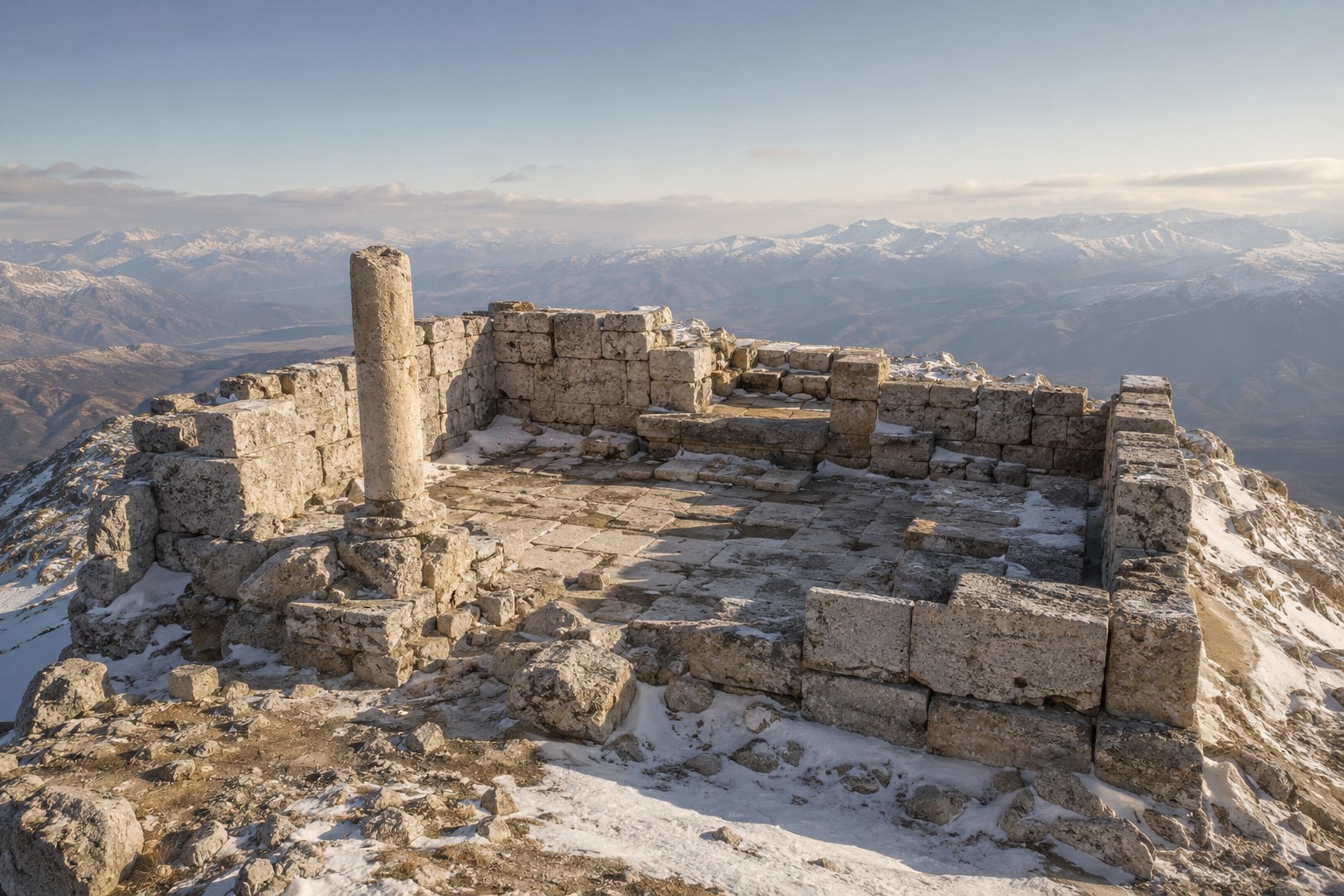
Numerous Greco-Roman sanctuaries have been documented across the Mount Hermon region. Their concentration indicates that the mountain held sustained religious significance, although the sanctuaries represent different periods, communities, and local traditions.
Near the highest summit are the remains commonly called Qasr Antar, documented in nineteenth-century surveys. A Roman-period inscribed stone pillar from Mount Hermon is held by the British Museum. The museum describes its Greek inscription as a warning not to enter the temple of Baal Hermon without taking the required oath.
An older literary tradition gives the mountain a different significance. The Book of Enoch—outside most Jewish and Christian biblical canons but preserved fully in Ethiopic and represented among the Dead Sea Scrolls—describes two hundred Watchers descending upon Mount Hermon in the days of Jared. According to the text, they bound themselves together by mutual oath before acting among humanity.
Genesis 6 gives a shorter and more enigmatic account of the “sons of God” and the “daughters of men.” The relationship between Genesis, the Enochic tradition, Mount Hermon, and later archaeological remains continues to generate scholarly and religious discussion.
At the mountain’s foot, Banias—ancient Caesarea Philippi—developed around a cave and spring associated with the worship of Pan. The New Testament places Jesus and his disciples in the region of Caesarea Philippi when Peter identifies him as the Messiah and Jesus speaks of the “gates of Hades.” Interpretations connecting that language directly to the physical grotto are theological readings rather than established archaeological conclusions.
Story File
In the Series
Book One of The Omega Watchers Expanded Edition takes its title from the ancient oath and its setting from Mount Hermon.
Orientation File
Static Map
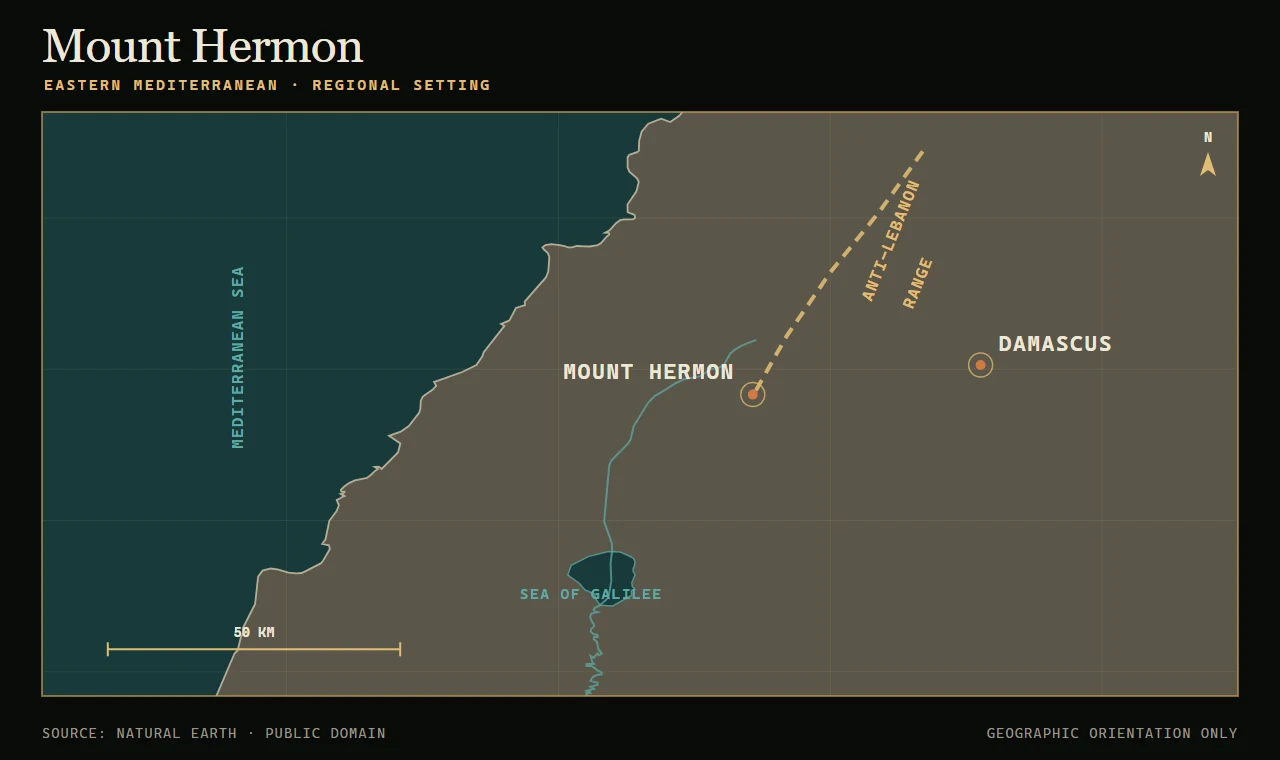
Source Trail
Further Reading
- 01British Museum — Roman-period pillar from Mount Hermon
Museum record for the stone pillar and oath-related Greek inscription.
- 02The Book of Enoch, Chapter 6 — R. H. Charles translation
Public-domain edition hosted by Project Gutenberg.
- 03Deuteronomy 3:9 — Sefaria Library
The verse recording the names Sirion and Senir.
- 04Inscriptions grecques et latines de la Syrie, Vol. 11 — AJA review
Academic review of the epigraphic corpus for Mount Hermon, including Qasr Antar and the region’s rural sanctuaries.
Reader Dispatches
KEEP YOUR EYES OPEN
Receive release updates, behind-the-story research, and new material from The Omega Watchers universe.